A corporate design agency helps organizations turn business strategy into a consistent visual and verbal identity. It may shape logos, typography, color systems, websites, packaging, presentations, and internal communication materials. The work is not limited to making a company look attractive. It creates recognizable signals that customers, employees, investors, and partners can understand quickly.
Paul Rand, one of the most influential corporate identity designers, said, “Design is the silent ambassador of your brand.” His words explain why a blue color palette, a carefully spaced wordmark, or a simple office sign can influence trust. A capable corporate design agency studies the organization before designing anything. It examines the market, audience, competitors, culture, and long-term goals. Then, it builds rules that remain useful across screens, printed reports, uniforms, and conference booths.
The process can feel less glamorous than expected. There are workshops, revisions, accessibility checks, and difficult conversations about weak ideas. A polished logo cannot repair poor service. That is an important limitation. Strong design supports a credible business; it cannot replace one. Experience also matters. Agencies often test identity concepts in real situations, such as a mobile screen, a sales proposal, or a crowded trade-show wall. The best result is not always the most dramatic. It is the system people can recognize, use, and trust repeatedly. This article explores what a corporate design agency does, how its services create practical value, and what companies should examine before choosing a partner.
What Is a Corporate Design Agency?
A corporate design agency helps organizations express their identity through consistent visual and strategic systems. Its purpose goes beyond creating attractive logos. Teams may define brand positioning, visual language, typography, packaging, websites, presentations, and workplace graphics. They study customer behavior, internal culture, and market context before producing design concepts. A practical project might include a tone-of-voice guide, color specifications, responsive layouts, and templates for sales teams.
The value is measurable, although measurement is not always simple. The Business Value of Design study examined more than 300 public companies and found that stronger design performers achieved 32 percentage points higher revenue growth over five years. The 2021 Design Economy report also estimated that design contributed £97.4 billion to the United Kingdom’s economy in 2019. These figures suggest that corporate design can influence commercial performance, not merely appearance. Still, correlation is not proof. Poor implementation can weaken even a thoughtful identity.
Experienced agencies connect creative decisions with business evidence. They test navigation, review accessibility, interview employees, and compare customer responses before final delivery. They should also explain limitations instead of promising instant growth. A beautiful guideline document can remain unused. That happens. The agency’s purpose is to make the identity usable in real situations, from a crowded mobile screen to a printed invoice, while helping the organization communicate with greater clarity and trust.

A corporate design agency helps organizations shape consistent visual identities across digital products, marketing materials, websites, and internal communications. The demand outlook for related design occupations highlights the growing importance of visual strategy, digital experiences, and brand consistency.
The chart shows projected employment growth in selected U.S. design-related occupations from 2024 to 2034. Corporate design agencies often combine these capabilities to deliver coherent and effective visual communication systems.
Source: U.S. Bureau of Labor Statistics, Occupational Outlook Handbook, 2024–2034 projections.
Corporate design agencies build the visual and verbal systems that help organizations appear credible, consistent, and recognizable. Their core services often begin with brand research, audience interviews, competitor reviews, and positioning workshops. These activities expose gaps before designers create anything.
A 2021 State of Brand Consistency report estimated that consistent brand presentation could increase revenue by up to 33%. The figure is persuasive, but it should not replace careful measurement.
Identity development is usually the agency’s most visible service. Designers create logos, color systems, typography rules, photography styles, icon sets, and practical brand guidelines. Good guidelines show details, not vague advice. They might specify a 24-pixel digital margin or show how a logo performs on a delivery vehicle.
Agencies may also design websites, user interfaces, presentations, packaging, signage, and internal templates. A 2023 global digital experience report found that 71% of surveyed consumers expected personalized interactions. That finding makes flexible design systems increasingly important.
Implementation support separates strategy from decoration. Agencies can audit existing materials, train internal teams, and test designs with real users. They may track recognition, conversion, accessibility, and employee adoption.
The work is rarely perfect. A beautiful identity can still fail when staff cannot use it quickly. Sometimes the guideline document becomes too complicated. That weakness deserves honest review before launch.
What Is a Corporate Design Agency?
Corporate design agencies build brand identities by turning business values into clear, consistent visual experiences. Their work begins with research, not decoration. Designers study company goals, customer expectations, competitors, and internal culture. They may interview employees, review sales materials, or observe how customers use a service.
Small details reveal important truths. A warehouse sign, an email template, or a product label can expose confusion. These findings help the agency create a practical identity system. The system may include a logo, color palette, typography, photography style, icons, packaging, and presentation templates. Each element should support the same message across digital and physical spaces.
Consistency builds recognition.
Strong agencies test their ideas before final delivery. They review designs on mobile screens, office walls, printed documents, and small packaging. They also check contrast, readability, accessibility, and cultural meaning. This process often reveals problems that look invisible on a presentation board. No identity system is perfect. A color may feel impressive in a studio but fail under warehouse lighting. A clever symbol may confuse international audiences. Honest feedback matters.
Experienced consultants balance creativity with evidence. They explain design decisions clearly and document usage rules for future teams. Clients should receive flexible tools, not only attractive files. More importantly, they need guidance for real decisions. Brand identity develops through repeated use, and even a well-researched system can require adjustment as the organization grows.
| Workstream | Primary Objective | Key Inputs | Typical Deliverables | Quality Check |
|---|---|---|---|---|
| Discovery and Alignment | Define the business context, audience, objectives, and project scope. | Business goals, stakeholder interviews, existing materials, audience information, and market context. | Project brief, stakeholder requirements, research questions, and agreed success criteria. | Stakeholder sign-off on scope, priorities, and decision-making responsibilities. |
| Audience and Market Research | Understand audience needs and identify relevant visual and verbal conventions. | Customer research, competitor review, category analysis, cultural considerations, and accessibility requirements. | Research findings, audience profiles, positioning observations, and opportunity areas. | Evidence-based recommendations linked to documented research findings. |
| Brand Strategy | Translate business direction into a clear and usable brand framework. | Business proposition, audience priorities, differentiation, organizational values, and communication goals. | Positioning statement, value proposition, brand principles, personality, and messaging architecture. | Clarity, relevance to target audiences, internal usability, and consistency with business objectives. |
| Identity Concept Development | Create visual directions that express the approved strategic foundation. | Brand strategy, creative brief, visual research, and communication priorities. | Moodboards, design routes, concept rationale, and representative applications. | Concept testing against strategic criteria, distinctiveness, legibility, and scalability. |
| Logo and Symbol System | Develop recognizable identifiers that work across different sizes and contexts. | Approved concept direction, usage requirements, reproduction methods, and legal review needs. | Primary mark, alternate arrangements, symbol, clear-space rules, minimum size, and monochrome versions. | Recognition, legibility, reproduction quality, and suitability for digital and physical applications. |
| Color System | Create a consistent color structure for recognition, hierarchy, and communication. | Brand personality, accessibility requirements, production methods, and digital interface needs. | Primary and supporting palettes, color specifications, hierarchy rules, and contrast guidance. | Contrast testing, reproduction consistency, and suitability for print, screen, and signage. |
| Typography and Layout | Establish a readable typographic voice and repeatable information structure. | Content types, languages, accessibility needs, media formats, and available font licenses. | Font families, type hierarchy, spacing principles, grid guidance, and layout examples. | Readability, hierarchy, consistency, licensing compliance, and responsive adaptability. |
| Imagery and Graphic Language | Define how photography, illustration, icons, and supporting graphics should appear. | Audience expectations, communication channels, content resources, and production capabilities. | Image direction, illustration principles, icon style, graphic devices, and usage examples. | Visual consistency, cultural appropriateness, accessibility, and practical content availability. |
| Verbal Identity | Make written communication reflect the same identity as the visual system. | Brand personality, audience needs, communication channels, terminology, and regulatory constraints. | Voice attributes, tone guidance, terminology, message examples, and editorial principles. | Clarity, inclusiveness, audience relevance, and consistency across communication channels. |
| Application Design | Demonstrate how the identity operates in real customer and organizational touchpoints. | Priority channels, user journeys, content formats, technical specifications, and operational constraints. | Digital layouts, presentations, documents, environmental graphics, campaigns, packaging, or internal materials. | Cross-channel consistency, usability, technical feasibility, and audience comprehension. |
| Brand Guidelines | Turn design decisions into clear rules that teams and suppliers can apply. | Final identity assets, approved applications, production requirements, and stakeholder feedback. | Identity manual, asset library, templates, specifications, do-and-do-not examples, and governance guidance. | Completeness, clarity, findability of assets, and ability of non-designers to follow the system. |
| Implementation and Governance | Help the organization adopt, maintain, and improve the identity over time. | Internal ownership, launch requirements, training needs, approval workflows, and measurement plans. | Rollout plan, training materials, review process, design support model, and ongoing optimization recommendations. | Adoption by teams, correct asset usage, workflow efficiency, and periodic performance review. |
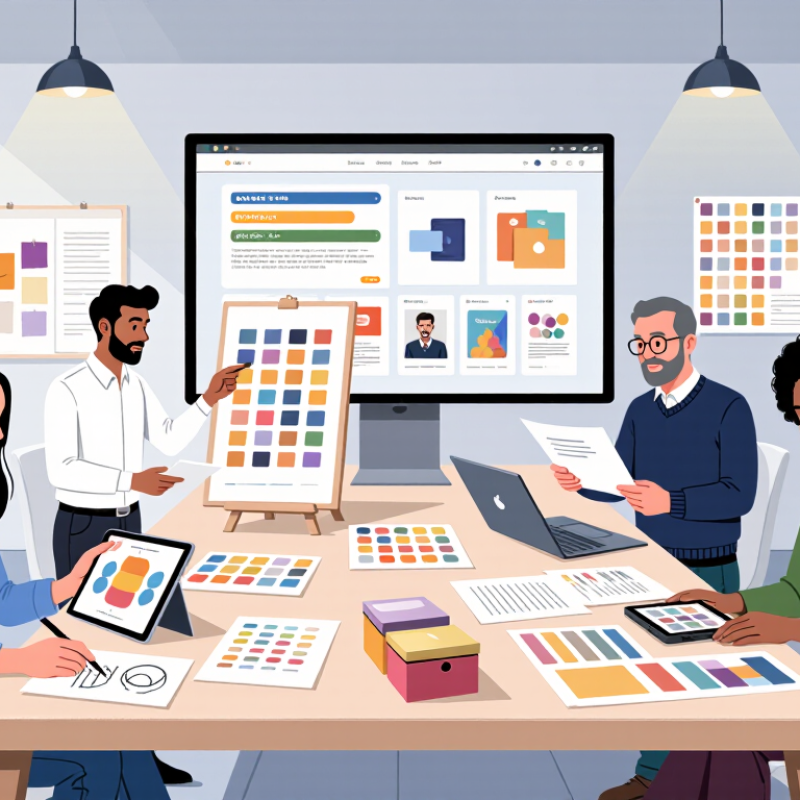
A corporate design agency shapes how an organization looks, sounds, and behaves across public touchpoints. Its team often includes an account director, brand strategist, art director, designer, copywriter, and production specialist. Each role has a clear responsibility, but collaboration matters more than job titles. The account director manages communication and deadlines. The strategist studies the organization, audience, competitors, and business goals. Designers then turn those findings into visual systems, such as logos, colors, layouts, signage, and presentation templates.
The workflow usually begins with discovery meetings, interviews, and a review of existing materials. The agency creates a brief with practical goals, required deliverables, and approval stages. Creative teams develop several directions, not just attractive images. They test whether each direction works on a mobile screen, office wall, printed report, or small document header. Client feedback guides revisions, while production specialists check file formats, accessibility, spacing, and technical details. A tidy process is helpful. It rarely stays tidy. Late feedback, unclear ownership, or changing priorities can weaken good work.
Tips: Name one decision-maker early. Keep feedback specific and connected to the brief. Request realistic applications, such as a website page or staff badge, before approving a concept. Ask for usage guidelines and editable files. Small omissions become expensive later. Review the final system with real users, because professional opinions can still miss everyday confusion.
A corporate design agency shapes how a business looks, sounds, and behaves. Its work may include identity systems, websites, packaging, presentations, and workplace graphics. The right partner should connect visual decisions with commercial goals. A polished logo alone is not enough.
Businesses should examine relevant experience, research methods, and measurable results. The McKinsey Design Index reported that top design performers achieved 32 percentage points higher revenue growth over five years. They also delivered 56% higher total shareholder returns. These figures do not guarantee success. They do show why design deserves business-level scrutiny. Ask for case evidence, not attractive images. Request the original challenge, process, launch conditions, and measured outcome.
Look closely at the agency’s working process. Can its team interview customers, challenge internal assumptions, and explain decisions clearly? The 2023 Future of Jobs Report places creative thinking among the most important rising workplace skills. That makes strategic design capability increasingly valuable. Trust also matters. The 2024 Trust Barometer found that business remains the most trusted major institution globally, but confidence varies sharply by market. A design partner should understand these local expectations. Check accessibility standards, approval stages, ownership rights, and post-launch support. The cheapest proposal may become expensive after revisions. The largest team may create unnecessary complexity. No brief is perfect. A useful agency will identify the gaps without hiding them.