
10 Home Pilates Reformer Buying Tips for Global Buyers

Buying a Home Pilates Reformer is more than choosing attractive upholstery and a polished wooden frame. Global buyers must assess engineering, comfort, shipping, maintenance, and after-sales support. A compact machine may look ideal in a bedroom, yet still require 2.5 meters of clearance for safe movement.

Joseph Pilates, the method’s founder, wrote, “Physical fitness is the first requisite of happiness.” His principle remains useful today. A reformer should support controlled movement, not merely decorate a home gym. Buyers need to examine carriage stability, spring resistance, shoulder-rest adjustment, footbar positions, and maximum user weight. Small details matter. Loose straps do not.

This guide presents 10 practical Home Pilates Reformer buying tips for international customers. It considers apartment size, user experience, material quality, delivery packaging, warranty coverage, replacement parts, and local safety expectations. A machine built for a studio may not suit a beginner practicing alone. Likewise, the cheapest option can become expensive after freight, assembly, or repair costs.

Some decisions remain imperfect. Product photographs cannot reveal every vibration or squeak. Online reviews may also reflect different body sizes and training habits. Careful buyers should request dimensions, manuals, test videos, and written warranty terms before paying. They should also confirm whether customer service can respond across time zones.

Reliable purchasing is rarely about finding one “perfect” reformer. It is about matching the equipment to the room, the body, and the long-term routine. This article helps global buyers ask sharper questions before bringing a reformer through the front door.
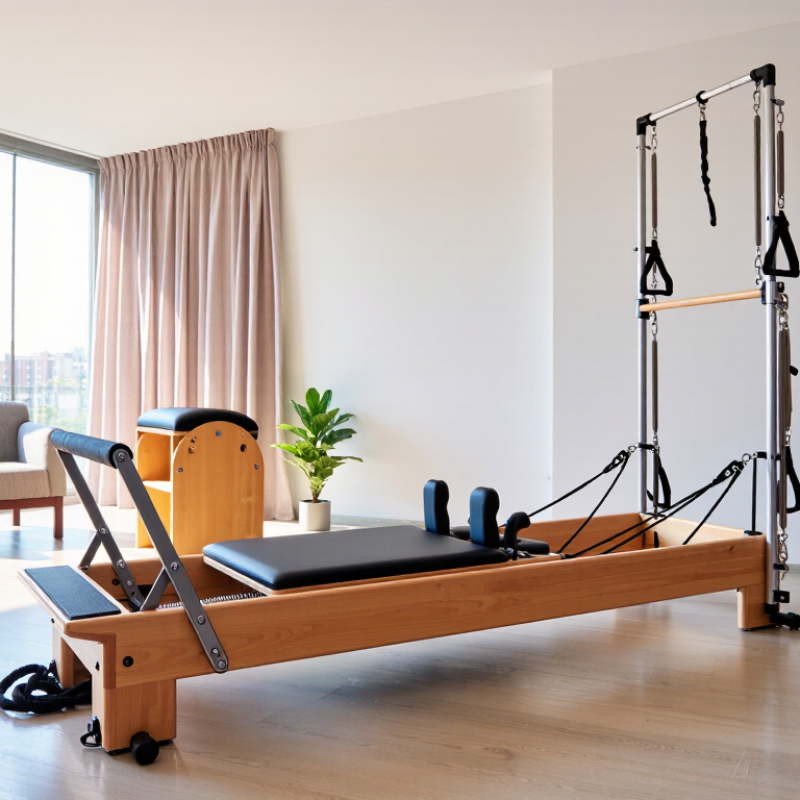
10 Home Pilates Reformer Buying Tips for Global Buyers

Define Your Home Pilates Reformer Goals and Available Space

Before buying a home Pilates reformer, define what you want to achieve. Do you need gentle mobility work, stronger legs, improved posture, or regular athletic training? Your answer affects the carriage resistance, spring range, footbar adjustment, and accessory needs. A beginner may value simple controls and clear adjustment marks. An experienced user may need more resistance options and a longer carriage.

Measure the room carefully, not just the equipment footprint. Leave space around the reformer for mounting, stepping, and safe movement. A practical setup may require about 2.5 meters of length and 1 meter of width, depending on the frame and exercises. Check ceiling height if you plan to use a tower or elevated attachments. Hard floors can transmit rolling noise, so a dense protective mat may help. Also measure doorways, stair turns, and elevator space before ordering. That detail is easy to overlook.

Your goal may change after a few weeks. Mine would. Choose a design that allows gradual progression rather than chasing advanced features immediately. Review weight limits, adjustment instructions, warranty terms, and replacement-part support from reliable documentation. For international buyers, confirm electrical requirements only for powered accessories, plus packaging dimensions and local import rules. A beautiful reformer that cannot enter the room is still the wrong purchase. Space often decides better than enthusiasm.

10 Home Pilates Reformer Buying Tips for Global Buyers — Define Your Home Pilates Reformer Goals and Available Space

Before choosing a home Pilates reformer, measure the available room and compare the equipment length with practical movement clearance. The chart uses common reformer body lengths and a transparent planning model.

How to read the chart: The estimated planning area assumes a 0.7 m reformer width, 0.6 m of open space on each side, and 1.0 m of movement space at each end. For example, a 2.4 m reformer requires approximately 4.4 m × 1.9 m, or 8.36 m². These are planning estimates; confirm the exact equipment dimensions and clearance requirements before purchase.

Compare Reformer Types, Materials, and Essential Features

10 Home Pilates Reformer Buying Tips for Global Buyers

Compare Reformer Types, Materials, and Essential Features

A home reformer should match your space, training goals, and maintenance ability. Full-size studio reformers offer smoother carriage travel and stronger frames. They need a permanent workout area. Foldable models save space, but their lighter frames may feel less stable during powerful movements. Tower reformers add vertical exercises and usually need extra ceiling clearance. Check the opened dimensions, not only the folded size.

Frame material affects durability and handling. Steel usually provides strong support, while aluminum can reduce weight and resist corrosion. Wooden frames offer a warm appearance, but joints need careful inspection. Look for a carriage with quiet wheels, firm shoulder rests, and a footbar with several safe positions. Springs should provide clearly different resistance levels. Ropes, straps, and buckles must feel secure without sharp edges. Small details matter.

Do not trust appearance alone. A thick cushion may compress unevenly after repeated use. Ask for the maximum user weight, replacement-part availability, assembly instructions, and maintenance schedule. For international purchases, confirm packaging protection, delivery terms, and local service options. A reliable supplier should provide measurable specifications, testing information, and a realistic warranty. I would also test the stopper and spring settings before regular training. No comparison is perfect. A compact reformer may fit beautifully, yet its shorter carriage could limit taller users. That trade-off is easy to miss.

Check Safety, Stability, Adjustability, and User Weight Capacity

10 Home Pilates Reformer Buying Tips for Global Buyers

Safety should guide every purchase, not the color or discount. Check whether the frame has rounded edges, secure footbars, covered springs, and reliable rope attachments. The carriage should stop smoothly without sudden jolts. Test the emergency release, if available. Read the manual before assembly, even if the setup looks simple. A qualified Pilates instructor can identify risks that product photos hide.

Tip

Inspect stability on your actual floor. A reformer may feel solid on a showroom surface but shift on smooth tile. Look for wide supports, adjustable levelers, and a frame that resists twisting. Leave enough space around the machine for mounting and safe movement. Check the folded position too. Some compact models become unstable when stored vertically, and that detail is easy to miss.

Adjustability affects comfort and long-term use. Confirm several footbar angles, carriage travel, spring resistance options, and shoulder-rest positions. Users with longer legs may need a longer carriage path. Smaller users may need closer settings. Never assume “universal” means comfortable. Review the stated user weight capacity, then allow a practical margin for movement, not just body weight. Dynamic exercise loads can be higher than expected. Ask whether the capacity was tested with accessories and repeated use. Weight ratings are sometimes unclear. That deserves a second question.

Evaluate Assembly, Storage, Maintenance, and Warranty Support

10 Home Pilates Reformer Buying Tips for Global Buyers

Evaluate Assembly, Storage, Maintenance, and Warranty Support

Assembly can determine your first training experience. Ask for a clear manual, labeled parts, and access to video guidance. A reformer should arrive with stable rails, secure fasteners, and accurately aligned moving parts. Confirm whether one person can assemble it safely. Some heavy frames require two adults and several hours. I once underestimated this step. The equipment worked, but installation took far longer than expected.

Measure the storage area before ordering. Record the ceiling height, doorway width, and floor space around the carriage. Folding models save room, but their locking mechanism needs regular inspection. Check the folded weight and lifting points, especially for apartments or upper-floor homes. Smooth wheels are useful, yet they can mark delicate floors without protective pads. Leave enough clearance for full leg movement.

Maintenance should be simple and documented. Look for replaceable ropes, springs, wheels, and upholstery covers. Ask how often rails need cleaning and which products are safe. Sweat, dust, and loose screws can affect performance quickly. Warranty terms should state coverage periods, exclusions, shipping responsibility, and repair procedures. Reliable support includes responsive communication and practical spare-part access across regions. A low purchase price may feel attractive, but delayed parts can interrupt training for weeks. I would also question unclear promises; vague support often becomes an expensive lesson.

10 Home Pilates Reformer Buying Tips for Global Buyers - Evaluate Assembly, Storage, Maintenance, and Warranty Support

Use this comparison framework to assess home Pilates reformers across different countries. Measurements and service periods are practical buying benchmarks; always confirm the final specifications, certifications, shipping terms, and local support before purchase.
No. Buying Dimension Recommended Benchmark What Global Buyers Should Verify Common Warning Signs Priority
1 Available Floor Space Allow approximately 240–300 cm of operating length and 90–120 cm of clear width, including room for movement beside the carriage. Measure the usable floor area, ceiling height, doorways, stairways, and lift dimensions. Check whether the reformer can be delivered through the narrowest access point. A product dimension is listed without clearance space, or the seller provides no doorway and access measurements. High
2 Assembly Requirements Prefer clear assembly instructions, numbered parts, standard tools, and an estimated setup time of about 30–90 minutes for basic home models. Confirm the number of packages, required helpers, video instructions, replacement hardware availability, and whether professional installation is offered in the destination country. Unclear manuals, missing parts procedures, permanent structural modifications, or assembly instructions available only in one language. High
3 Foldable or Upright Storage A foldable or vertical-storage design can reduce the storage footprint, but the folded height and weight must remain manageable for the user. Check the folded dimensions, locking mechanism, minimum ceiling height, wheel stability, lifting points, and whether accessories must be removed before storage. No positive locking system, unstable storage position, difficult lifting, or storage instructions that conflict with the product photographs. High
4 Frame and Weight Capacity Look for a stable frame and a clearly stated maximum user weight. A practical home design should not require the user to operate at the published limit. Verify whether the stated capacity includes dynamic movement, jumping, or only static load. Ask about frame material, weld quality, floor protection, and anti-slip feet. Only a vague “heavy-duty” claim is provided, or the capacity is not supported by a test method or written specification. High
5 Carriage and Rail Movement The carriage should move smoothly along the full rail length without side-to-side play, scraping, or abrupt noise during normal use. Ask about rail material, wheel and bearing replacement, carriage travel length, noise level during movement, and the recommended user-height range. Uneven movement, exposed sharp edges, excessive noise, inconsistent wheel contact, or no replacement parts for wear components. High
6 Springs and Resistance Adjustment A useful home setup normally provides multiple resistance levels and a secure spring-bar or rope-adjustment system. Confirm the number and type of springs, resistance progression, color-coding or labeling, spring replacement intervals, and whether replacement springs can be shipped internationally. Unlabeled resistance settings, stretched or corroded springs, difficult adjustment, or no documented replacement procedure. High
7 Routine Maintenance Basic care should usually involve wiping high-contact surfaces after use, keeping rails free of debris, checking fasteners, and inspecting ropes, straps, wheels, and springs regularly. Request a maintenance schedule, approved cleaning products, lubrication instructions, inspection points, and a list of user-replaceable parts. Maintenance instructions recommend unsuitable solvents, require specialized service for simple checks, or omit guidance for springs and ropes. Medium
8 Upholstery and Hygiene Cushions should be firm, securely attached, easy to wipe clean, and resistant to ordinary sweat and repeated home use. Check upholstery dimensions, surface material, seam quality, replacement-pad availability, cleaning restrictions, and the expected indoor temperature and humidity range. Permanent odor, loose upholstery, exposed staples, absorbent surfaces, or no replacement option for worn padding. Medium
9 Electrical and Import Compatibility A purely mechanical reformer avoids mains-voltage issues. If powered accessories are included, electrical ratings must match the destination market. For electronic components, verify voltage, frequency, plug type, adapter certification, customs documents, product labeling, and whether batteries are included in shipment. Missing voltage information, incompatible plugs, unapproved adapters, unclear customs responsibility, or incomplete import documentation. High
10 Warranty and After-Sales Support Seek written coverage terms, a clear claim process, and realistic access to parts and technical help. Frame coverage and wear-part coverage are often different. Confirm warranty duration, geographic coverage, exclusions, labor and shipping responsibility, response times, spare-part availability, and the process for damage discovered after delivery. Verbal-only promises, unclear exclusions, buyer-paid international return shipping, no local service route, or warranty terms hidden behind a QR code. High
Buyer Checklist: Before ordering, save the written product specification, packed and assembled dimensions, invoice, warranty terms, delivery inspection procedure, and contact details for technical support. Photograph the package and product condition before assembly, especially when purchasing across borders.

Confirm Global Shipping, Certifications, Pricing, and After-Sales Service

10 Home Pilates Reformer Buying Tips for Global Buyers

Global shipping deserves more than a low freight quote. UNCTAD’s Review of Maritime Transport 2024 reports that ships carry over 80% of global merchandise trade by volume. Ask for the exact Incoterm, delivery port, insurance coverage, and carton dimensions. Confirm whether duties, VAT, customs brokerage, and room-of-choice delivery are included. A reformer arriving at the curb is not fully delivered. Request photos of pallet protection and a written damage-claim process. I once trusted a “door-to-door” promise too quickly; the final-mile surcharge changed the calculation.

Certification requires equal care. ISO 20957-1 provides safety requirements for stationary training equipment, but local acceptance can differ. Request applicable test reports, load ratings, material declarations, and user warnings before payment. Check wooden frame stability, carriage stops, spring markings, rope adjusters, and footbar locking points. Certification logos alone prove little. The Global Wellness Institute’s 2024 Global Wellness Economy Monitor valued the wellness economy at 6.3 trillion dollars in 2023. That growth attracts capable suppliers, but also rushed documentation.

Compare pricing using landed cost, not product price. Include replacement springs, spare wheels, installation tools, technician travel, and payment fees. A clear quotation should state currency and warranty duration. After-sales support should identify response times and stocked parts. Ask for a digital assembly guide and maintenance schedule. Keep one spare spring set nearby. It may feel excessive, but downtime costs more than storage. My own checklist still misses details sometimes, especially local tax treatment. That is why an independent customs broker and a physical pre-shipment inspection remain valuable.

Are you ready? Let’s make your brand fresh and amazing.

Get Started