7 Best Fragrance Paper Tube Suppliers for Global Buyers?
Fragrance packaging is entering a more demanding phase. Consumers now expect attractive presentation, reliable protection, and credible sustainability claims. The global fragrance market was valued at approximately USD 50.85 billion in 2023, according to Grand View Research, with continued growth projected through 2030. That expansion creates stronger demand for distinctive secondary packaging, including the Fragrance Paper Tube.
Paper tubes can provide a warm, tactile experience on a retail shelf. Their spiral-wound structure also supports custom diameters, printed surfaces, and fitted inserts. However, appearance alone is not enough. The Smithers report, The Future of Sustainable Packaging to 2028, highlights rising pressure to improve material efficiency, recyclability, and supply-chain transparency. A tube with plastic laminates, metal parts, or difficult adhesives may not perform as sustainably as its outer paper suggests.
This guide reviews seven Fragrance Paper Tube suppliers for global buyers. The evaluation focuses on manufacturing capability, paper quality, printing consistency, closure options, customization, certifications, minimum order quantities, and export experience. Practical details matter. Can the supplier match a deep black finish across 20,000 units? Can the tube protect a glass bottle during ocean freight? These questions reveal more than a polished catalog.
No supplier is perfect. That assumption needs testing. Buyers should request samples, material specifications, test results, and clear sustainability documentation before placing an order. The ISO 18606 standard can help assess paper-based packaging systems, although real recyclability still depends on local collection and processing infrastructure. Reliable sourcing requires evidence, not vague green language.
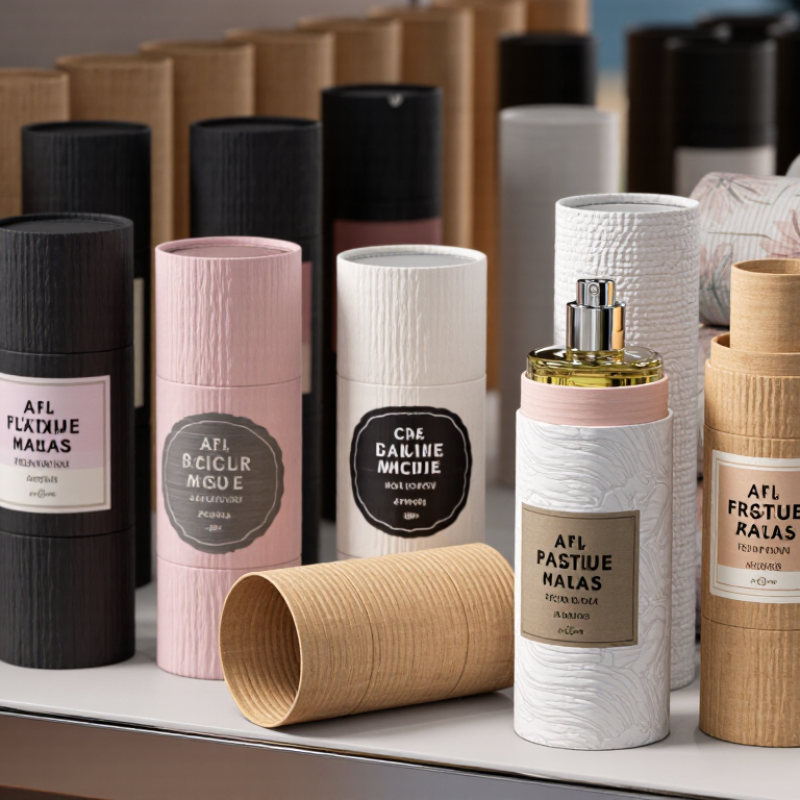
What Are Fragrance Paper Tubes and Why Do Global Brands Use Them?
Fragrance paper tubes are rigid, cylindrical containers made from wound paperboard, adhesive layers, and fitted closures. They usually include an inner insert to hold a perfume bottle securely. The outer surface may use textured paper, foil details, embossing, or soft-touch coating. In packaging evaluations, the tube often feels warmer and more distinctive than a standard carton.
Global brands use these tubes because they create a strong unboxing experience while protecting delicate glass during storage and transport. Their round structure can resist compression when properly engineered. Paperboard also supports custom sizing, making it suitable for small samples, travel formats, and premium retail packaging. However, “paper-based” does not always mean fully recyclable. Plastic coatings, metalized films, and mixed adhesives can complicate recovery. Moisture resistance also needs testing, especially in humid shipping routes.
Tips: Ask suppliers for compression results, material specifications, and closure samples. Check whether the inner fit prevents bottle movement without causing pressure marks. Request coating and adhesive details before approving artwork. Small flaws matter. A tube may look excellent but still dent during transit. Confirm dimensions, tolerances, and batch consistency with a pre-production sample. Suppliers should also explain how they manage color variation, odor transfer, and packaging dust. These practical checks help buyers compare the seven shortlisted suppliers fairly, rather than choosing only by appearance or quoted price.
7 Best Fragrance Paper Tube Suppliers for Global Buyers? - What Are Fragrance Paper Tubes and Why Do Global Brands Use Them?
| Supplier Profile | Typical Supplier Type | Common Tube Structure | Typical Diameter | Typical Height | Typical MOQ Range | Typical Production Lead Time | Best Fit for Global Buyers |
| Profile 1 | High-volume paper packaging manufacturer | Rigid spiral-wound paper tube with paperboard top and base | 30–100 mm | 60–180 mm | 5,000–20,000 units | 25–45 working days after artwork approval | Large fragrance launches requiring consistent repeat production |
| Profile 2 | Custom luxury packaging specialist | Thick-wall tube with rigid shoulder, premium wrap, and fitted insert | 40–110 mm | 80–220 mm | 1,000–5,000 units | 35–60 working days | Premium perfume boxes, gift sets, and limited editions |
| Profile 3 | Sustainable packaging supplier | Recycled-paper tube with water-based adhesive and paper labels | 25–90 mm | 50–180 mm | 3,000–15,000 units | 30–50 working days | Brands prioritizing recycled content and reduced plastic use |
| Profile 4 | Short-run and sampling supplier | Standard rigid tube with digital-printed outer artwork | 30–80 mm | 60–160 mm | 100–2,000 units | 10–25 working days | Product testing, crowdfunding, market trials, and samples |
| Profile 5 | Decorative finishing specialist | Paper tube with foil stamping, embossing, debossing, or spot coating | 35–100 mm | 70–200 mm | 2,000–10,000 units | 30–55 working days | Luxury shelf presentation and tactile brand experiences |
| Profile 6 | Integrated tube-and-insert supplier | Rigid paper tube supplied with molded-pulp, paperboard, or foam-free insert | 40–120 mm | 80–240 mm | 2,000–12,000 units | 35–60 working days | Fragrance bottles needing internal protection during shipping |
| Profile 7 | Export-focused packaging supplier | Stackable rigid tube with carton-ready packing and export documentation | 30–100 mm | 60–220 mm | 3,000–20,000 units | 30–55 working days, excluding international transit | Overseas buyers needing standardized logistics and scalable replenishment |
Buyer note: Fragrance paper tubes are rigid cylindrical packages made from wound or layered paperboard. They are commonly used for perfume bottles, discovery sets, solid fragrances, and gift packaging because they provide structural protection, printable surfaces, and a paper-based alternative to some plastic-heavy formats.
Data note: The figures shown are practical industry-typical ranges for initial supplier comparison, not guaranteed specifications for any individual supplier. Confirm material composition, recycled content, closure fit, compression strength, coating requirements, testing standards, minimum order quantity, and delivery schedule before placing an order.
How to Evaluate Fragrance Paper Tube Suppliers Worldwide
7 Best Fragrance Paper Tube Suppliers for Global Buyers
How to Evaluate Fragrance Paper Tube Suppliers Worldwide
Evaluating fragrance paper tube suppliers requires more than comparing catalog photos. Request physical samples with your actual bottle size, closure, and artwork. Check whether the tube protects the product during compression, vibration, and humidity changes. Ask for paperboard thickness, inner lining details, adhesive type, and printing tolerances. A reliable supplier should explain these specifications clearly. Vague answers deserve caution.
Review production evidence, not promises. Request recent quality records, material traceability, factory photographs, and realistic lead times. Confirm minimum order quantities, sampling charges, packaging methods, and export experience. Independent testing can verify crush strength, odor transfer, color stability, and surface durability. Also check whether materials support the destination market’s packaging and environmental requirements. A beautiful prototype may still fail after weeks in a warm warehouse. That lesson is easy to underestimate.
Tips: Compare at least three samples under identical conditions. Measure wall thickness with a caliper. Test the fit repeatedly. Ask how defects are recorded and corrected. Keep written approval samples before mass production. Communication matters, but it is not enough. One weakness remains: paper tubes can vary slightly between batches, so buyers should define acceptable tolerances before signing.
The 7 Best Fragrance Paper Tube Suppliers for International Buyers
The seven best fragrance paper tube suppliers for international buyers are usually found among specialist packaging manufacturers, not general paper vendors. A strong shortlist includes custom tube converters, premium rigid packaging houses, recycled paper specialists, low-MOQ workshops, luxury finishing suppliers, export-focused factories, and contract packaging partners. Each type serves a different purchasing need.
From practical sourcing experience, sample quality should come before catalogue pricing. Check the tube’s inner diameter, wall strength, cap fit, and surface resistance against fragrance oils. Ask suppliers for material specifications, production tolerances, testing records, and export references. Reliable manufacturers can explain their paper source, adhesive system, printing process, and carton protection. They should also provide clear lead times and realistic minimum order quantities.
International buyers need more than attractive prototypes. Confirm whether the supplier supports language-accurate artwork, multiple currencies, pallet standards, and destination-country documentation. Recycled content claims should be supported by traceable evidence, not vague marketing language. Request a pilot order before committing to large production. Small defects matter. A slightly loose lid or uneven edge can weaken a premium presentation. I would also compare landed cost rather than factory price alone, because freight, customs handling, and protective packaging can change the final result. One concern remains: some suppliers promise full customization but outsource critical steps. Ask who controls printing, forming, inspection, and packing. That answer may reveal more than a polished sample.
7 Best Fragrance Paper Tube Suppliers for International Buyers
Global buyers typically compare fragrance paper tube suppliers across these seven practical criteria. The chart presents an editorial benchmark showing the recommended importance of each factor when screening suppliers; the percentages represent evaluation priorities rather than company-specific performance data.
How to Compare Prices, Quality, Certifications, and Shipping Terms
For global buyers, comparing fragrance paper tube suppliers requires more than checking the lowest quotation.
Grand View Research estimates that the global paper tubes market will continue expanding through 2030, driven partly by sustainable packaging demand. This growth attracts new factories, but capacity does not guarantee consistency.
Request three production samples.
Check tube diameter, wall thickness, seam strength, print sharpness, and the fit of the inner insert. A tube that crushes during a warehouse test is not a bargain.
Compare prices using the same specification sheet. Include paper grade, coating, closure, printing colors, minimum order quantity, tooling, and packaging.
Ask whether the quotation is EXW, FOB, CIF, or DDP. These terms can change the landed cost sharply.
The UNCTAD Review of Maritime Transport reports continuing volatility in global shipping conditions, so request freight validity dates and a clear surcharge policy.
A supplier offering a lower unit price may still create higher costs through weak cartons, rework, or port delays.
Quality evidence should include ISO 9001 procedures, FSC chain-of-custody documentation when certified paper is claimed, and applicable packaging test records.
The Sustainable Packaging Coalition’s industry research consistently links material transparency with stronger buyer confidence, but certification alone is not proof of every batch.
Ask for recent inspection photos and a pre-shipment report.
I would also test ten tubes after cold storage and humidity exposure.
My comparison may remain imperfect; laboratory testing adds time and cost. Still, ignoring those conditions is a bigger risk.
Keep payment milestones tied to approved samples, production checks, and shipping documents.
